From Research to Real-World Impact: Soroosh Alavi’s Journey into AI-Driven Electronics Reliability
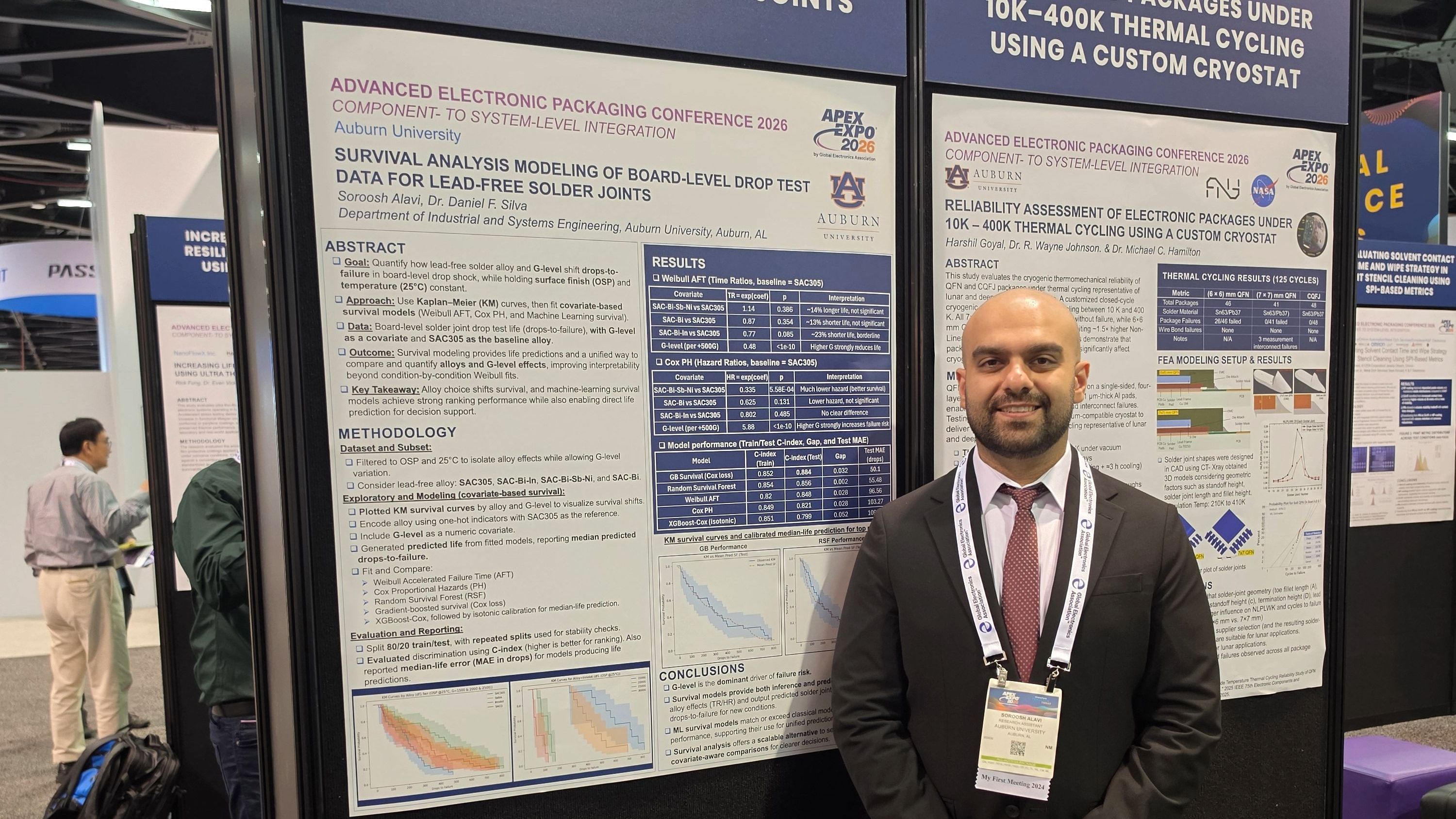
For Soroosh Alavi, a PhD student in Industrial and Systems Engineering at Auburn University, the path from academic research to real-world application is already taking shape. Specializing in electronics reliability and leveraging machine learning to better understand failure behavior, Soroosh brought his work to the global stage at IPC APEX EXPO. In this interview, he shares how presenting his research helped bridge the gap between theory and industry, the growing role of AI in manufacturing, and why students should consider a future in electronics manufacturing.
Charlene: Share a little background on yourself and maybe something about the next steps, future plans, and aspirations.
Soroosh: My name is Soroosh Alavi, and I am a PhD student in Industrial and Systems Engineering at Auburn University. My research focuses on electronics reliability, especially solder joint reliability, where I use data science, machine learning, and survival analysis to better understand failure behavior and improve life prediction. Looking ahead, I hope to build a career in data science, AI, and machine learning engineering, ideally in areas related to electronics manufacturing, reliability, and intelligent industrial systems.
Charlene: Briefly explain why you were interested in presenting a poster during the Technical Program.
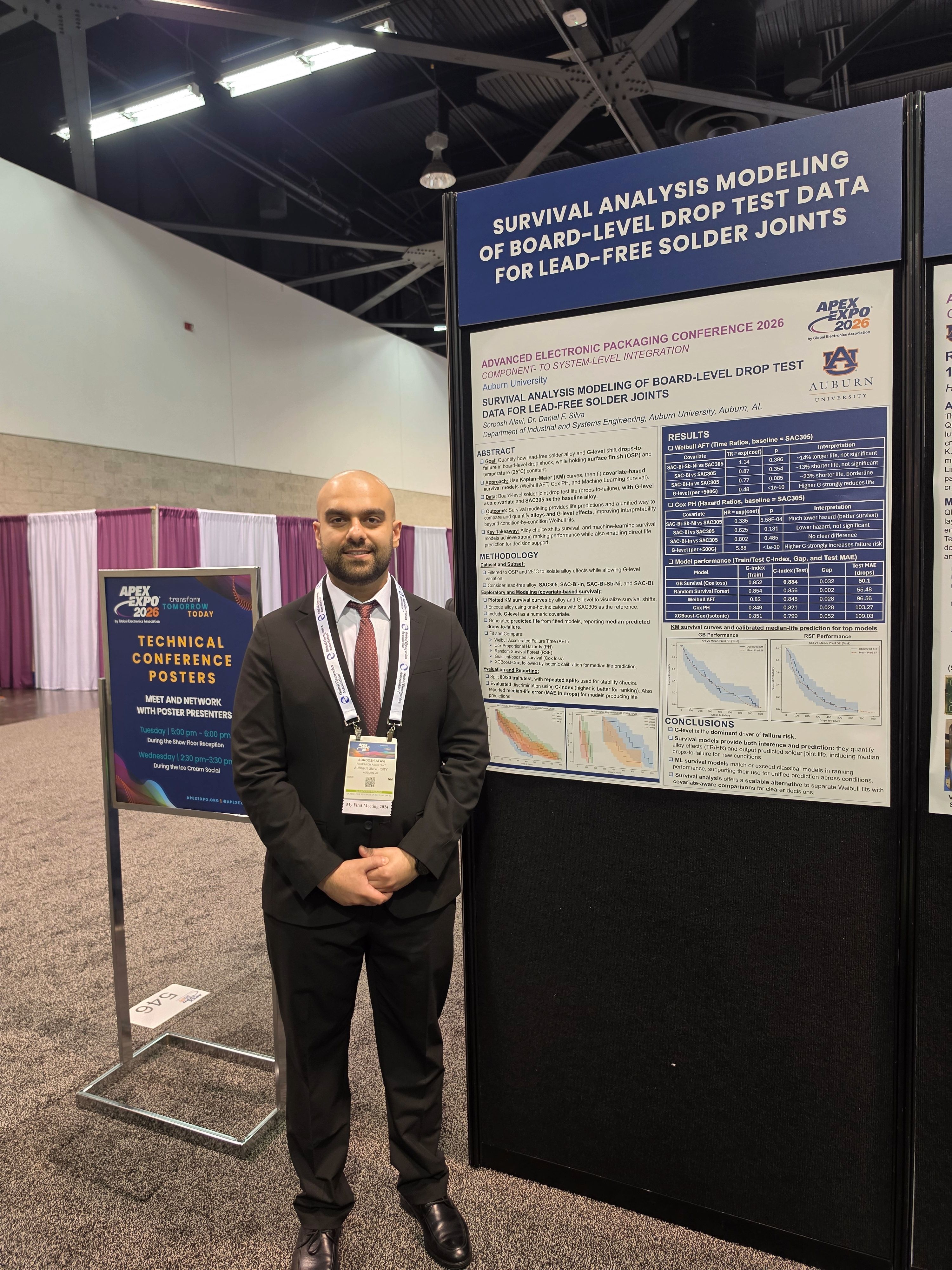
Soroosh: I was interested in presenting because it gave me a chance to share my research with both academic and industry audiences. My work is technical, but it also has strong practical value for electronics reliability and manufacturing, so I felt APEX EXPO was a very meaningful place to present it. It was a great opportunity to receive feedback, discuss ideas, and connect my research to real industry needs.
Charlene: What are the most valuable aspects during IPC APEX EXPO?
Soroosh: One of the most valuable aspects is the combination of technical knowledge, industry exposure, and networking in one place. It is not just about learning from presentations, but also about seeing the latest technologies on the show floor and speaking directly with professionals working in the field. That mix makes the experience very valuable for students and early career researchers.
Charlene: How important is exposure to these type of events in developing talent? What did you enjoy from the experience, and what was difficult during the process?
Soroosh: Exposure to events like APEX EXPO is very important because it helps students understand how research connects to real industrial challenges and opportunities. I really enjoyed meeting people from industry, seeing advanced technologies in person, and learning how companies are using AI and data-driven tools in manufacturing. The most difficult part for me was condensing a highly technical research project into a poster with limited space, while still making it clear and understandable for a broader audience.
Charlene: Do you feel that the experience at IPC APEX EXPO provided you with knowledge that can be valuable for your career progression?
Soroosh: Yes, absolutely. The experience gave me a better understanding of current industry trends, especially how AI, analytics, and automation are being integrated into electronics manufacturing and reliability. It also helped me better understand how to communicate my research in a way that is relevant to industry, which is very important for my future career.
Charlene: Did you meet any prospective employers? What are your dream employer characteristics, and what role or position would you pursue?
Soroosh: I had the chance to speak with several companies at the expo, including ones especially relevant to my interests such as DaoAI, AEGIS Software, Arch Systems, Aletiq, Idea Vision, and Palitronica. What stood out to me most were companies that are bringing AI into manufacturing and reliability in practical ways. I am especially interested in roles related to data science, AI, and machine learning engineering in electronics reliability and manufacturing, and I value employers that are supportive, collaborative, innovative, and committed to mentoring growth.
Charlene: What’s your next step in terms of professional growth and career aspirations?
Soroosh: My next step is to continue building strong expertise at the intersection of reliability engineering, machine learning, and applied data science. I want to further develop research that has both technical depth and practical industry impact, while also preparing for a career where I can apply AI and analytics to improve manufacturing performance, reliability, and decision-making.
Charlene: Why would you recommend students consider career paths in electronics manufacturing?
Soroosh: I would recommend electronics manufacturing because it is a field where engineering, data, innovation, and real-world impact come together. There are many opportunities to work on meaningful problems related to quality, reliability, automation, and process improvement. It is also an exciting time for the field because AI and advanced analytics are opening new possibilities.
Charlene: Maybe highlight the student chapter program. How did you benefit? Any advice for students
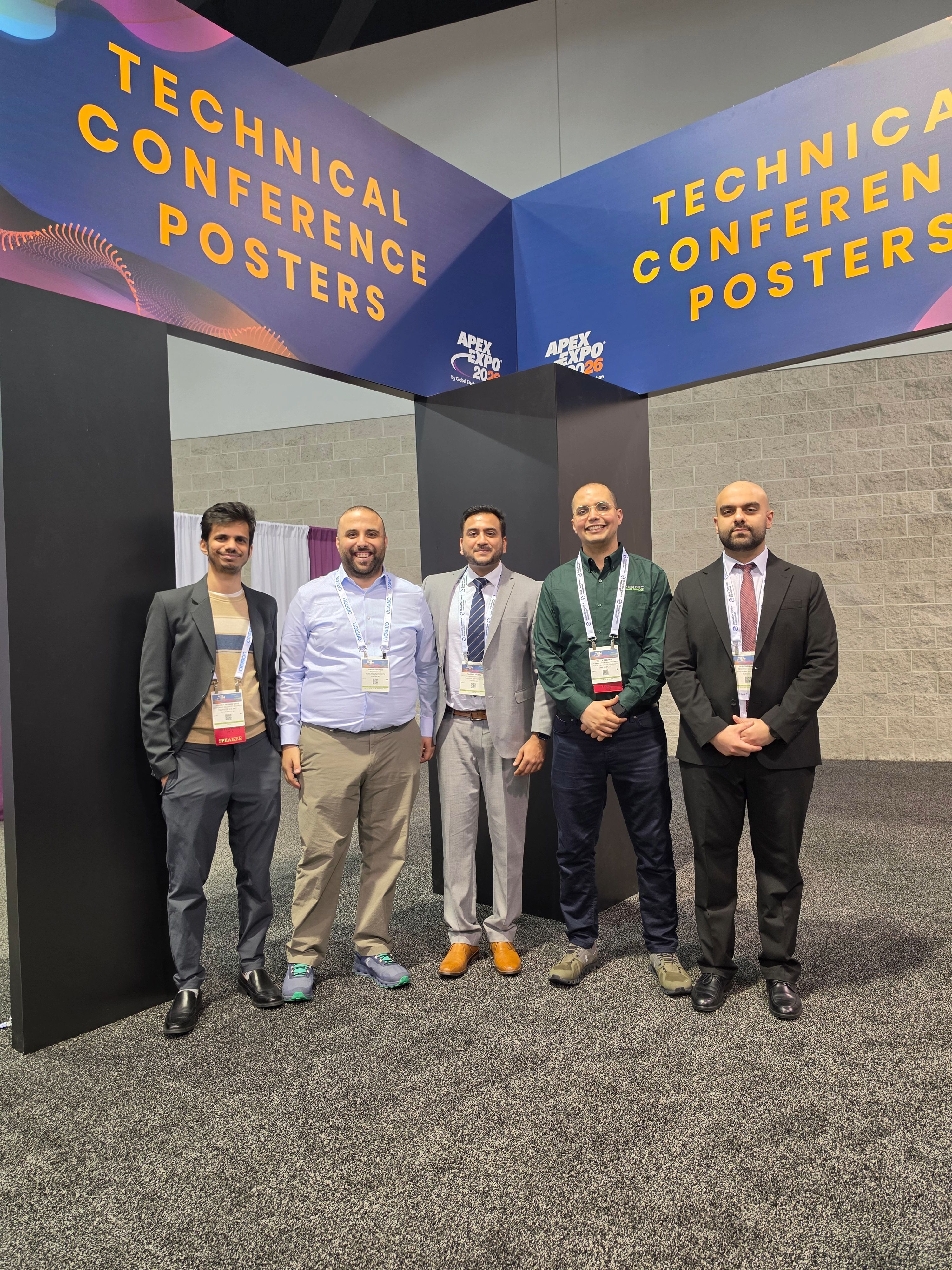
Soroosh: The student chapter program is a great opportunity because it helps students gain exposure to the electronics manufacturing field, build professional networks, and become familiar with organizations like the Global Electronics Association and the opportunities they offer. It also gives students access to experiences such as scholarships, Emerging Engineer opportunities, and poster presentations at events like APEX EXPO. My advice to students is to get involved early, ask questions, talk to people, and take advantage of every chance to connect research, learning, and industry exposure.
Charlene: What has been the highlight of the IPC APEX EXPO?
Soroosh: For me, the biggest highlights were the keynote talks during the luncheon and the expo show floor itself. Seeing how many companies are integrating AI into machines, equipment, and manufacturing systems was especially exciting. It showed how these technologies can improve production speed, accuracy, and product reliability in very practical ways.
Charlene: Please share three new things you learned during your time at IPC APEX EXPO.
Soroosh: First, I learned how rapidly AI is being integrated into electronics manufacturing, not just as a concept, but in real tools and equipment used on the production floor. Second, I gained a better appreciation for how strongly industry values solutions that are not only technically sound, but also scalable, interpretable, and practical to implement. Third, I learned how important communication is, because even very strong technical work becomes much more impactful when it is presented clearly to people from different backgrounds.
Charlene: Please share a few sentences on what this experience meant to you personally.
Soroosh: This experience meant a lot to me personally because it gave me the chance to step outside the academic environment and connect directly with people in industry. It helped me see how my research fits into a broader professional landscape and how it can contribute to real challenges in electronics manufacturing and reliability. It was also motivating because it strengthened my interest in pursuing a career where I can apply data science, AI, and engineering in a meaningful and practical way.
