How to Land Your First Engineering Job: Lessons from Industry Leaders
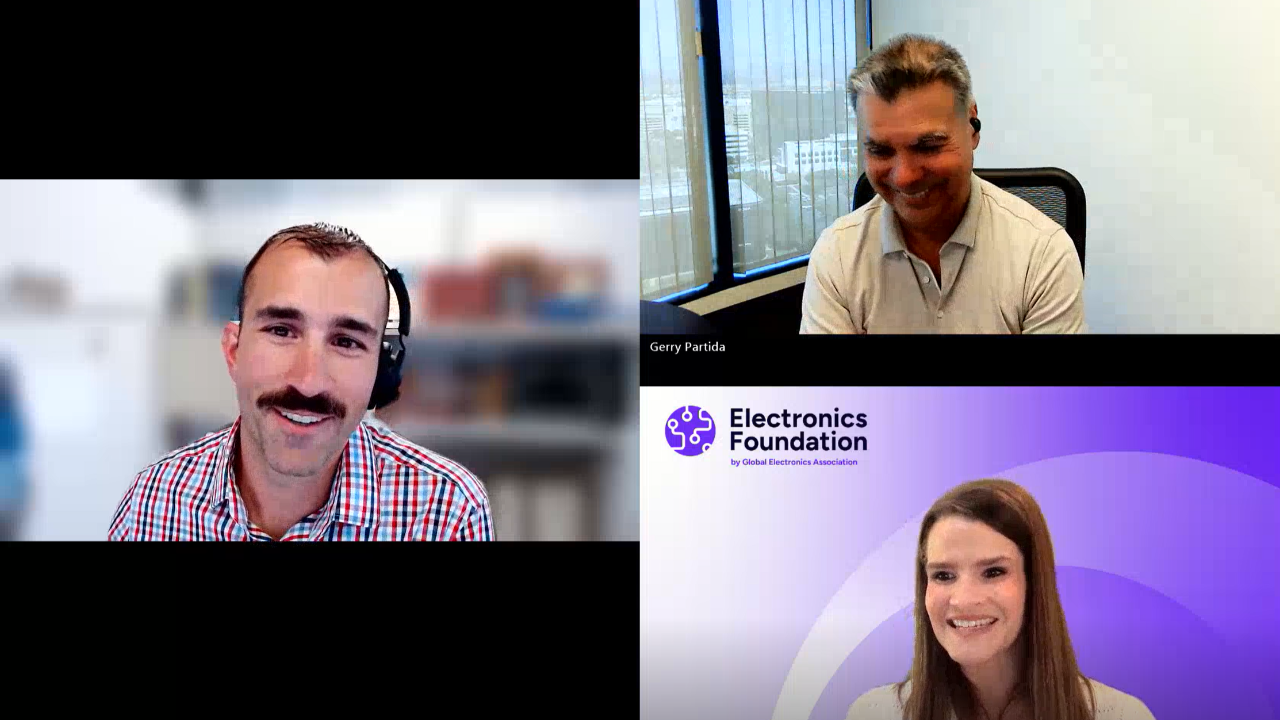
Breaking into engineering requires more than coursework. It demands curiosity, communication, hands-on application, and a network that opens doors. In a recent Electronics Foundation webinar, Gerry Partida (VP of Technology, Summit Interconnect) and Kevin Kusiak (Lockheed Martin Fellow) outlined what truly differentiates candidates at the start of their careers. Their advice blends practical steps with memorable quotes you can carry into interviews, labs, and early roles.
“If you want to be successful, you have to be curious about what it is you’re doing.” — Gerry Partida
What Hiring Managers Really Want: Applied Experience
Hiring managers start on paper, but they decide in conversation. Especially when they see evidence of real projects and initiative. Kusiak stressed that beyond coursework, he looks for application: “What I’m really looking for is hands-on experience… I want to see how you’ve applied Circuits 101.” He points to internships, university clubs, enterprises, and even personal projects as strong signals.
Partida agreed, noting that real-world work “puts you ahead of those that are just in an academic world,” because it shows how you function in team settings and the messiness of actual engineering work. He emphasized learning from setbacks: “Even when they don’t work, there’s so much to learn from the process.” Cross-disciplinary projects, including mechanical, communications, and software, stood out to him because they mirror industry collaboration and constraints.
GPA vs. Fit: Motivation and Communication Win the Day
GPA may be a filter, but it is not destiny. “GPA… is an easy metric,” Kusiak said, but “it doesn’t tell me if you can design an electronic circuit or not,” adding that a strong GPA signals adaptability and learning agility rather than guaranteed performance. What ultimately matters is your interaction with the hiring team. “What really matters is going to be our interaction… seeing their excitement.”
He recommends using the top of your resume to orient the reader. “Tell me what you’re looking for… give me a general idea,” even if you are still exploring. That clarity helps reviewers place your experiences in the context of roles they are filling.
Communication and Curiosity: Career Multipliers
Technical strength is essential, but it is amplified by communication and curiosity. “If you can’t communicate your thoughts and your ideas… the value of your technical skills are significantly diminished,” Kusiak said, underscoring the need to persuade peers, leaders, and customers to believe in your ideas. Partida added: “The two most contagious themes on the face of the Earth are fear and enthusiasm… Be enthusiastic… be genuine.”
Both urged students to ask questions without fear. “Don’t be ashamed… that’s how you become a better engineer,” Kusiak noted. Partida reinforced that it is acceptable to say “I don’t know” if you follow through to find out, showing persistence and professional humility.
Networking That Works: Chapters, Standards, and LinkedIn
Networking helps you navigate rigid hiring processes and solve problems faster. “Your network’s very powerful,” Kusiak said, explaining how connections can help “bypass some of the process” at large companies with structured HR screens. Partida’s analogy was vivid. “The Rolodex is not worth $1,000,000… it’s the people in that Rolodex,” emphasizing the business impact of relationships built on mutual respect.
They highlighted concrete avenues:
- Join IPC student chapters and the Emerging Engineer Program to meet mentors and peers.
- Attend standards development meetings, even if you are just listening at first, to learn context and meet subject-matter experts.
- Use LinkedIn as a professional brand channel. “You’re branding yourself. Be careful what you say. Put good content that is valuable… They will flock to your content,” Partida said, noting his posts drew tens of thousands of views and led to speaking invitations.
Standards Literacy: A Real Differentiator
Understanding and applying standards, such as IPC-2221, IPC-2222, and IPC-2223, makes you more valuable on day one. “You’re seeing how the sausage is made,” Kusiak said, describing standards work as a way to build context and credibility. Partida shared the impact. “When you’re that person that knows the standards in and out, you are the most valuable person in the room,” because correct interpretation can keep programs on schedule and prevent expensive scrap.
For students in regions with fewer opportunities, they offered specific guidance. “If they use [IPC] design standards and apply that, they have a greater chance of success,” even when geographically distant from major hubs.
Internships and Fit: Reducing Risk for Both Sides
Internships signal fit and reduce risk for employers and candidates alike. “If you had an internship… I look at you as a lower flight risk,” Kusiak said, because you are more likely to be interested in the role and understand expectations. Partida encouraged reframing imperfect experiences. “Even if the internship was a wreck… What did you learn from the process?” Authentic reflection, including what worked, what did not, and why, often resonates more than perfection.
Remote vs. On-Site: Learning Tradeoffs
Remote roles exist, including at large firms, but may limit early-career learning. “Being in a remote position, you’re kind of limiting yourself,” Kusiak noted, because lab access, hands-on testing, and quick peer help are harder at a distance. Partida added that on-site presence helps you observe downstream impacts and fix issues earlier by walking to adjacent teams.
Tools and Skills to Prioritize: Beyond Programming
Partida emphasized investing in skills that accelerate correct-first-time design. 3D modeling, GD&T fundamentals, and simulation tools. Simulation, he argued, compresses iteration cycles and boosts competitiveness. “If you’re not first, you’re last… shorten development cycle time and knock it out of the park the first time.” His broader point. Understand the rules and constraints across disciplines, including physics, electronics, chemistry, and mechanical, because “all of these things are in a circuit board.”
Smart Use of AI: Accelerator, Not Autopilot
AI can surface information quickly, but you must remain the expert who validates it. “It brings information… quicker,” Kusiak said, while cautioning about bad assumptions and the need to challenge outputs. Partida’s practical habit. Ask AI, “What am I not thinking about?” to uncover blind spots. Use it to research and draft tactful communications, but “it’s not the decision maker.”
Early-Career Mindset: Explore, Then Focus
Both leaders urged exploration across sub-disciplines before specializing. “Spend more time exploring different areas,” Kusiak said. Even paths you do not pursue can “put you on the other side of… a problem years down the road,” building empathy and better designs. Partida wished he had layered more multi-disciplinary exposure earlier because it accelerates judgment and problem-solving later. “It would have been nice to have had all those experiences.”
Final Takeaways
Entering engineering. Build real things, communicate clearly, ask better questions, learn the standards, and invest in relationships. Or, as Partida put it. “Let your enthusiasm shine through and be authentic… Always stay curious, be enthusiastic, and be genuine.” And from Kusiak. “Ask questions… communicate well… understand problems… that’s how you advance.”
