
Qais Qasaimeh’s Journey Through the Emerging Engineer Program
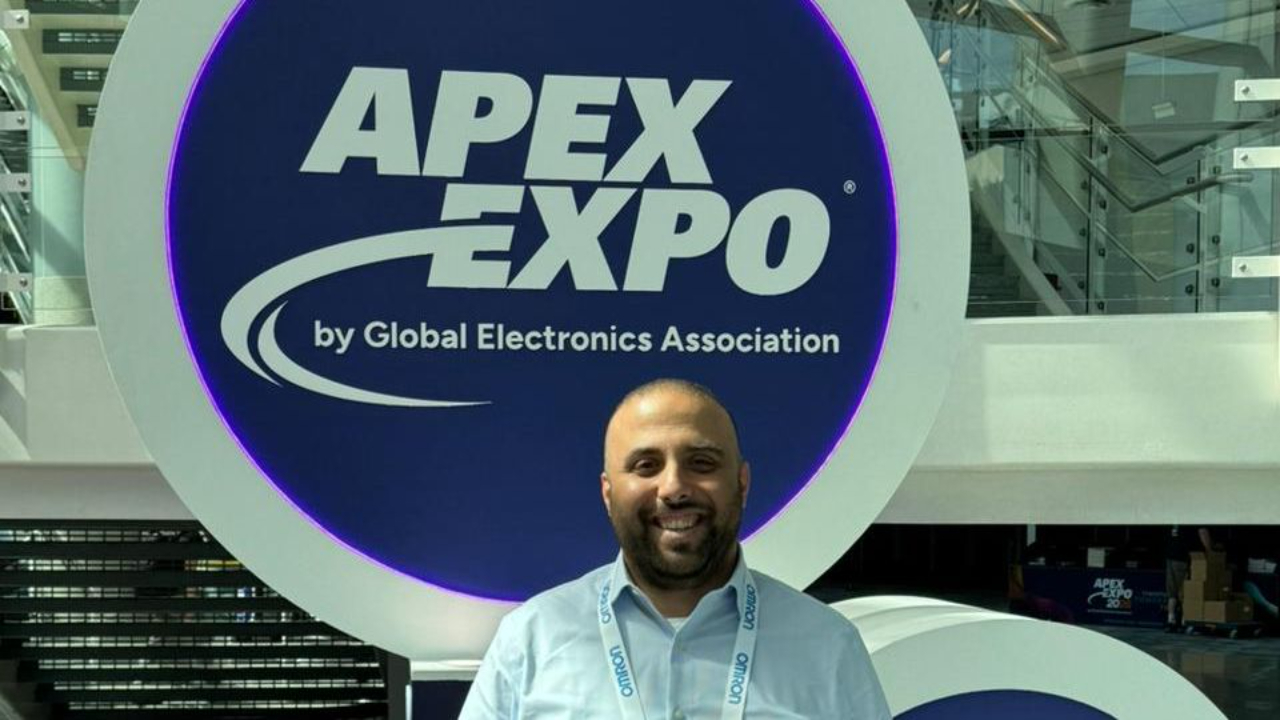
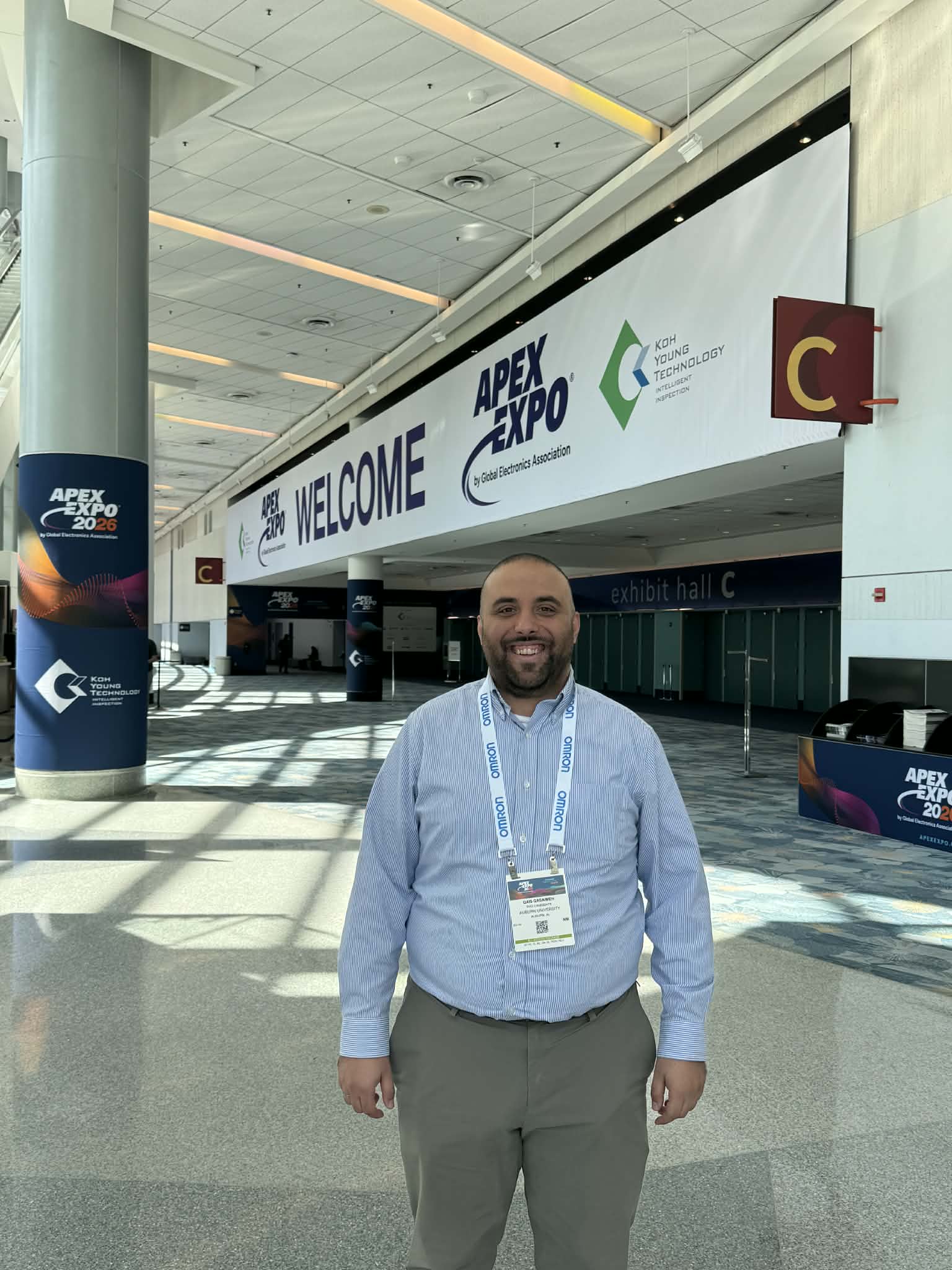
Bridging the gap between academic research and real-world application is a critical step for emerging engineers entering today’s fast-evolving electronics industry. For Qais Qasaimeh, a Ph.D. candidate in Industrial and Systems Engineering at Auburn University, that bridge became clearer through his participation in the Emerging Engineer Program and IPC APEX EXPO.
With a strong focus on data-driven modeling and reliability in electronic packaging systems, Qais is passionate about applying advanced research to solve practical challenges in electronics manufacturing. Through mentorship, networking, and firsthand exposure to industry leaders, he gained valuable insights that are shaping both his immediate career goals and long-term aspirations.
In this Q&A, Qais shares his experience in the program, the impact of mentorship, key takeaways from IPC APEX EXPO, and why he encourages students to explore careers in electronics manufacturing.
Charlene: Share a little background on yourself (A little bio would be perfect) and maybe something about the next steps, plans, and aspirations.
Qais: My name is Qais Qasaimeh, and I am a Ph.D. candidate in the Department of Industrial and Systems Engineering at Auburn University. My research focuses on improving the reliability of solder joints in electronic packaging systems through data-driven models. In particular, I develop interpretable, data-driven models to predict material behavior and reliability across various operating conditions. Looking ahead, I aim to continue advancing data-driven methodologies for reliability and materials engineering, with a focus on bridging the gap between experimental data and predictive modeling. My long-term goal is to contribute to the development of more reliable and high-performance electronic systems while pursuing a career in academia or one that combines research, innovation, and practical impact.
Charlene: Briefly explain why you were interested in the Emerging Engineer Program.
Qais: I was particularly interested in the Emerging Engineer Program because it provides a valuable opportunity to engage directly with industry professionals and gain insight into how organizations operate in practice. Interacting with experienced engineers helps bridge the gap between academic research and real-world applications. Additionally, the program offers an excellent platform for students to enhance both their technical knowledge and professional skills, including communication, networking, and understanding industry expectations.
Charlene: What are the most valuable aspects of the Emerging Engineer Program?
Qais: The most valuable aspects of the Emerging Engineer Program are the direct interaction with industry professionals and the exposure to real-world practices in electronics manufacturing. Engaging with experienced engineers provides insight into current challenges, industry expectations, and emerging technologies, which is difficult to obtain in a purely academic setting.
Charlene: How important is mentorship in developing talent? What did you enjoy from the mentorship experience… and what was difficult during the process?
Qais: Mentorship plays a critical role in developing talent by providing guidance, perspective, and practical insight beyond formal education. Having access to experienced professionals helps accelerate learning, improve decision-making, and better understand industry expectations and career pathways. One of the aspects I enjoyed most about the mentorship experience was the opportunity to receive personalized feedback and learn from mentors' real-world experiences. It was particularly valuable to discuss challenges, career development, and how to transition research skills into practical applications.
One challenge during the process was making the most of the limited time available, as there is often a lot to learn and discuss within a short interaction. However, this also encouraged me to be more focused and intentional in asking questions and engaging in meaningful conversations.
Charlene: Do you feel that the experience at IPC APEX EXPO provided you with knowledge that can be valuable for your career progressions?
Qais: Yes, the experience at IPC APEX EXPO provided valuable knowledge that will significantly support my career progression. In particular, interacting with board members and industry leaders gave me a broader perspective on the field and helped me better understand its strategic and leadership aspects. As I aim to take on leadership roles in the future, these conversations were especially impactful in shaping my vision for advancing solutions that benefit both technicians and engineers.
I also had the opportunity to connect with professionals and potential employers during the event. My ideal employer values innovation supports data-driven decision-making, and encourages continuous learning and collaboration. I am particularly interested in roles related to data science, machine learning, and reliability engineering within electronics manufacturing. I am seeking a position where I can apply my research experience to solve real-world problems and help develop more reliable, high-performance systems.
Charlene: What’s your next step(s) in terms of professional growth and/or career aspirations?
Qais: My next steps focus on completing my Ph.D. while continuing to strengthen my expertise in machine learning, reliability engineering, and data-driven modeling for complex engineering systems. I am actively preparing to transition into a role where I can apply these skills to real-world problems, particularly in electronics manufacturing and reliability.
In terms of career aspirations, I aim to contribute to the development of more reliable and high-performance electronic systems by leveraging advanced data analytics and AI. I am interested in pursuing roles in data science, machine learning, or reliability engineering, with a long-term goal of taking on leadership positions where I can drive innovation, guide research and development efforts, and create impactful solutions that bridge academia and industry.
Charlene: Why would you recommend students consider career paths in electronics manufacturing?
Qais: highly recommend that students consider careers in electronics manufacturing, as it is a dynamic and impactful field at the intersection of advanced technology, materials, and real-world applications. It offers opportunities to work on meaningful challenges in reliability, performance, and innovation across critical systems that are essential to modern society. The student chapter programs play a significant role in supporting this pathway. Through my involvement, I connected with industry professionals, participated in technical events, and gained exposure to real-world problems beyond the classroom. These experiences helped me better understand the field, build confidence, and develop both technical and professional skills.
My advice to students is to get involved early, take advantage of networking opportunities, and actively engage with industry through conferences, workshops, and student chapters. These experiences can provide valuable insights, open career opportunities, and help bridge the gap between academic learning and industry practice.
Charlene: What has been the highlight of the IPC APEX EXPO?
Qais: One of the highlights of the IPC APEX EXPO for me was participating in standard development meetings. It was a unique experience to observe how industry professionals collaborate to review, update, and improve technical standards. Seeing how decisions are made and how changes to important documents are implemented gave me valuable insight into the impact of standards on the industry.
Charlene: Please share three new things you’ve learned during your time at IPC APEX EXPO?
Qais: During my time at IPC APEX EXPO, I learned several valuable things. First, I gained insight into how industry standards are developed and updated through collaborative discussions among experts, which highlighted the importance of standardization in ensuring reliability and consistency across electronic systems.
Second, I developed a better understanding of current challenges and emerging trends in electronics manufacturing, particularly in AI-related electronics reliability, materials, and advanced packaging technologies.
Third, I learned the importance of effective communication and collaboration between engineers, technicians, and industry stakeholders, especially when translating technical knowledge into practical, real-world solutions.
Charlene: Please share a few sentences on what this experience meant to you personally.
Qais: This experience was very meaningful to me personally, as it provided a valuable opportunity to connect with industry professionals at a time when I am actively exploring career opportunities. It helped me better understand the industry landscape, expectations, and potential career paths. Additionally, it gave me confidence in how my research and technical skills can be applied in real-world settings.
